
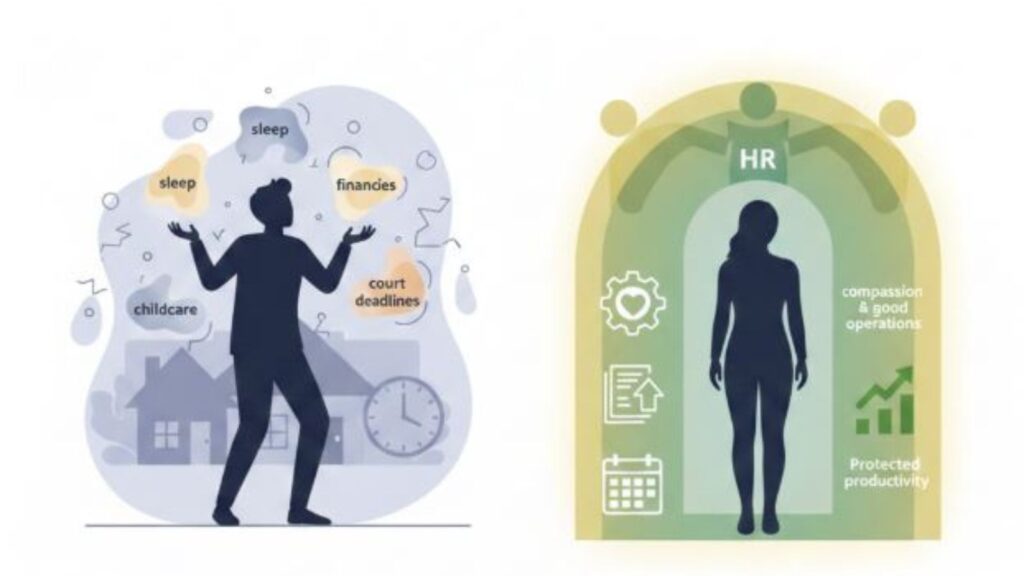
When an employee goes through a divorce, it usually spills into work life. Even the most focused team member can struggle with sleep, finances, childcare, and court deadlines.
HR can’t fix the personal side, but it can shape an environment that supports stability, reduces overwhelm, and protects overall productivity. Here are four practical HR actions that balance compassion with good operations.
1. Use Flexible Scheduling and Workload Triage
Divorce often comes with unpredictable legal appointments, school schedule shifts, and emotional stress. Flexibility gives employees room to manage these changes without derailing their performance.
Make flexibility a default option
Flexible arrangements don’t need to be dramatic. Small shifts often make the biggest difference.
- Short term flex hours
- Temporary remote days
- Adjusted deadlines
Triage workloads thoughtfully
Keep communication clear, set priorities, and remove non essential tasks when needed. This protects the employee from burnout while avoiding resentment on the team. According to research from HR Acuity, proactive workload adjustments help managers maintain performance while supporting wellbeing during major life events.
Track operational impacts
Absenteeism, productivity patterns, and team workload distribution are useful KPIs. You’re not measuring the employee’s crisis. You’re measuring business continuity so you can intervene early and fairly.
2. Guide Employees Through Benefits and EAP Resources
Many employees don’t understand their benefits until they urgently need them. HR can reduce confusion by helping them navigate what’s already available.
Explain what the EAP actually offers
Some staff assume EAP programs only provide emergency counseling. In reality, many include legal consultations, financial planning, and family support. EAP clarity increases employee usage and reduces stress during disruptive life events, and can also improve productivity.
Make enrollment or updates easy
Benefits often change after divorce. HR can offer step by step guidance on updates such as:
- Dependent coverage
- Life insurance beneficiaries
- Tax withholding
Tie support to performance stability
Helping employees use their benefits is not only supportive. It also reduces the kind of unmanaged stress that leads to errors, burnout, and long term disengagement.
3. Strengthen Confidentiality and Psychological Safety
Divorce is personal. Employees need to know HR will handle their situation discreetly and professionally.

Build a high trust protocol
Employees should understand who will know what, why those people need the information, and how it will be used. A simple written overview works well for consistency.
Train managers on privacy boundaries
Managers should never ask for sensitive details. They only need to know:
- The adjusted schedule or expectations
- The timeline for re evaluation
- How to escalate concerns to HR
Model non judgmental communication
A neutral script like, “Let me know what flexibility you need this week, and we’ll plan around it,” keeps conversations supportive and prevents accidental overreach.
4. Provide Manager Training and Quality Referral Resources
Managers are usually the first to notice the strain a divorce puts on an employee. They need training so they can respond with empathy while staying within their professional lane.
Give managers simple guidance, not scripts
Teach them how to:
- Recognize signs of stress
- Ask supportive, non intrusive questions
- Offer flexibility without prying
- Refer the employee to HR or resources when needed
Offer vetted resource lists
Employees often search online for legal or financial guidance but feel overwhelmed by the noise. HR can maintain a short list of general resources that explain local processes, timelines, and expectations. For example, when someone needs clarity on how divorce works in Texas, a Tad Law League City divorce attorney can offer a clear overview of local requirements through resources available on their site. Using curated sources keeps employees from relying on random or misleading information.
Maintain boundaries while being helpful
Managers shouldn’t recommend specific legal strategies or take sides, but they can say, “HR keeps a list of general resource guides if you want them.” This protects both the employee and the organization.
Keeping an Eye on KPIs Without Losing Humanity
Divorce can impact attendance, focus, and turnover risk. HR can quietly track a few indicators while keeping empathy at the center:
Absenteeism patterns
- PTO spikes
- Missed deadlines
- Turnover risk after the crisis period
Numbers should never be used to judge an employee in crisis. They help HR spot trends, adjust workloads, and decide when a check in is needed. And if you’ve already taken the time to improve productivity through things like workplace setup, keeping KPIs in mind is a good idea in any case, not just for divorce management purposes.
Building a Supportive Workplace Culture
Supporting employees through divorce isn’t about becoming involved in their private lives. It’s about creating a workplace where people feel safe enough to communicate when they’re struggling, and where managers know how to respond without causing harm. When done well, this approach boosts retention, builds loyalty, and strengthens team culture.
If your HR team is building out its wellbeing strategy, consider creating a small library of guides, templates, and manager quick tips. Even simple resources can make a meaningful difference for employees navigating major life changes.