

Seven financial platforms were tested against real founder needs, then ranked by reporting speed, fee transparency, and actual business utility.
| Name | Pros | Cons | Pricing |
| KOHO | Guaranteed approval0% interest tradelineAccess to financial coach | Cannot withdraw credit funds directly | $0 – $14.75/mo |
| Float | Access up to $100K in 24 hrsUnified CAD/USD cards | Built for established startups, not day-one sole props | Custom / Tiered |
| Ramp | No personal guaranteeAI automated expense tracking | Premium features reserved for enterprise tiers | Free base product |
| Hutsy | AI-driven financial guidanceSingle API to 50+ lenders | Geared toward short-term operational credit | Varies by lender |
| Windmill Microlending | 95% repayment success rateWraparound career coaching | Restricted to skilled immigrants and refugees | Low-interest loans |
| Venn | No foreign exchange feesNo traditional hard checks | Lacks broader treasury management tools | Custom pricing |
| Woveo | Community-based group modelsHighly inclusive for newcomers | Lower operational spending limits initially | Free / Premium |
Canada’s startup scene is in serious trouble. Self-employment sits at just 12.8 percent of total employment, the lowest share in 45 years. And how many self-employed Canadians have paid employees? Down 57 percent since 2000.
For the first time in 2024, more Canadian-educated founders launched their software companies in the U.S. than at home. That’s a sobering stat. With domestic conditions deteriorating, building a strong financial profile isn’t just a growth tactic anymore; it’s a survival requirement.
When VC money dries up, founders fall back on traditional banks and personal loans. Capital investment has dropped to 0.2 percent of GDP, down from 0.5 percent in 2022. The CFIB reports that more businesses have been closing than opening since early 2024, and the National Angel Capital Organization says Canada’s three largest startup hubs lost $66 billion in ecosystem value.
So what does all this mean for you? If you want favorable loan terms without risking personal financial ruin, you need a spotless repayment history. Here’s a look at seven platforms that can help you get there.
How These Platforms Were Tested
Each platform here was evaluated against the real-world demands of running a Canadian business, not just judged on marketing claims. The focus was on data reporting quality, bureau communication speed, and how each tool actually performs under pressure.
Fee transparency carried the most weight in the rankings. Bootstrapped founders can’t afford hidden annual fees or predatory interest structures, so platforms with clear, upfront pricing scored higher. Here’s a telling number: 28 percent of women founders avoid applying for commercial loans entirely because they fear rejection. A solid platform needs to report consistently to bureaus like Equifax, helping you build your score and avoid those frustrating denial letters.
KOHO

KOHO is the standout pick in this roundup for overall credit building. The platform lets you establish a financial footprint without falling into the compounding debt traps that come with traditional corporate cards. You get a dedicated zero-percent-interest tradeline, with no upfront cash collateral requirements or hard credit checks during the application.
Pay your monthly subscription on time, and that positive history is reported directly to Equifax. Over 400,000 Canadians have used the platform to build their profiles, with the average user seeing a 93-point increase after 18 consecutive months. Those aren’t small numbers.
The pricing is where things get interesting for cash-strapped founders. The Essential plan is completely free, making it a solid starting point for bootstrapped entrepreneurs. Premium tiers top out at $14.75 per month and include perks such as up to 50 percent off the reporting feature and cash back on everyday spending categories like transportation and groceries.
“Our guaranteed approval process ensures that even early-stage founders with zero prior financial history can begin establishing their credentials immediately,” says the KOHO team. You also get access to a financial coach who can walk you through questions about your Equifax reporting status.
| Feature | Details |
| Primary Use Case | Risk-free personal and early-stage profile building |
| Main Benefit | 0% interest tradeline with guaranteed approval |
| Bureau Reporting | Direct monthly reporting to Equifax Canada |
| Target Audience | First-time founders, bootstrappers, new entrepreneurs |
| Starting Price | $0/mo (premium tiers unlock discounts) |
Float

Float is built specifically for the Canadian market, offering corporate charge cards that scale as your startup grows. It pulls together Canadian and U.S. dollar spending into a single dashboard, cutting through the fragmented workflows that plague most growing teams. Right now, Float serves over 6,000 Canadian businesses and handles over $1 billion in payments annually.
You can open an account in under 24 hours and access up to $100,000 in operational funds almost immediately. That’s a sharp contrast to the slow approvals and paperwork piles at traditional banks. A recent $100 million funding round signals strong investor confidence in the platform’s trajectory.
| Feature | Details |
| Primary Use Case | Unified corporate card issuance and expense management |
| Main Benefit | Up to $100K in corporate capital within 24 hours |
| Card Currencies | CAD (Visa) and USD (Mastercard) cards |
| Target Audience | Scaling, venture-backed startups with growing headcounts |
| Starting Price | Custom tiered pricing based on volume |
Ramp
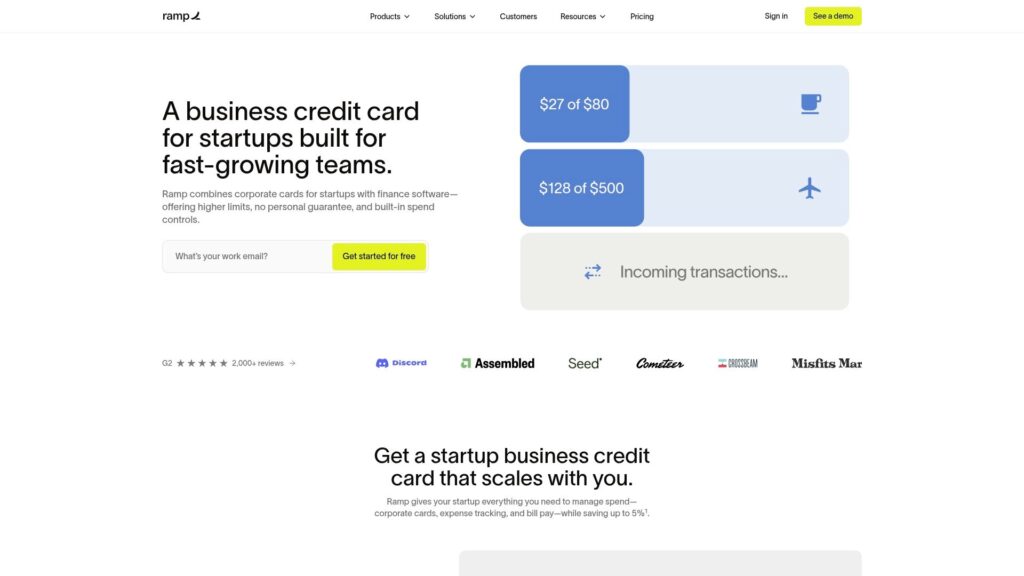
Ramp started as an American product, but it’s quickly become the go-to financial operations tool for Canadian startups managing cross-border transactions. The platform issues high-limit corporate cards with no personal guarantees, which is a relief if you’re tired of putting personal assets on the line. Its backend uses AI to automate expense management, vendor bill payment, and real-time enforcement of spending policies.
Ramp currently serves over 50,000 global companies and powers over $100 billion in purchases annually across its network. But here’s what makes it different: instead of rewarding you for spending more, Ramp’s software is designed to help companies cut waste. Active customers reportedly generate an average of 5 percent in direct savings through automated receipt matching.
| Feature | Details |
| Primary Use Case | All-in-one financial ops and cross-border spend |
| Main Benefit | High-limit cards, no personal guarantees |
| Key Technology | AI receipt matching and multi-currency bookkeeping |
| Target Audience | High-growth Canadian startups with international operations |
| Starting Price | Free base product; optional premium upgrades |
Hutsy

Toronto-based Hutsy, a Techstars graduate, fills a market gap by offering a smart digital alternative to predatory payday lenders. It connects borrowers to over 50 verified lending institutions through a single, secure API. That means faster approvals for short-term capital without the maze of redundant paperwork.
Not approved instantly? An AI agent walks you through customized repair strategies. Hutsy reported generating $500,000 in annual recurring revenue within just two months of launching. The platform is especially useful for solo founders, independent bootstrappers, or underbanked entrepreneurs who need fast access to operational funds.
| Feature | Details |
| Primary Use Case | Fast access to short-term, fair-rate capital |
| Main Benefit | One API connecting to 50+ pre-vetted lenders |
| Support Tool | AI agent for personalized score repair guidance |
| Target Audience | Solo bootstrapped founders, underbanked entrepreneurs |
| Starting Price | Varies by matched lender terms |
Windmill Microlending
Windmill Microlending is a national charity providing working capital to skilled immigrants and refugees. It proves that alternative underwriting models can work by combining accessible funds with wraparound professional support. The organization offers low-interest microloans of up to $15,000 to newcomers trying to restart careers and businesses in Canada.
The lending program has a 95 percent repayment rate, which speaks volumes about borrower reliability. A recent $50 million campaign aims to empower 12,000 skilled newcomers by 2027.
| Feature | Details |
| Primary Use Case | Low-interest micro-loans for requalification and business entry |
| Main Benefit | Career coaching and business mentorship included |
| Loan Limit | Up to $15,000 at below-market rates |
| Target Audience | Skilled immigrants and refugees |
| Starting Price | Low-interest monthly repayment plans |
Venn
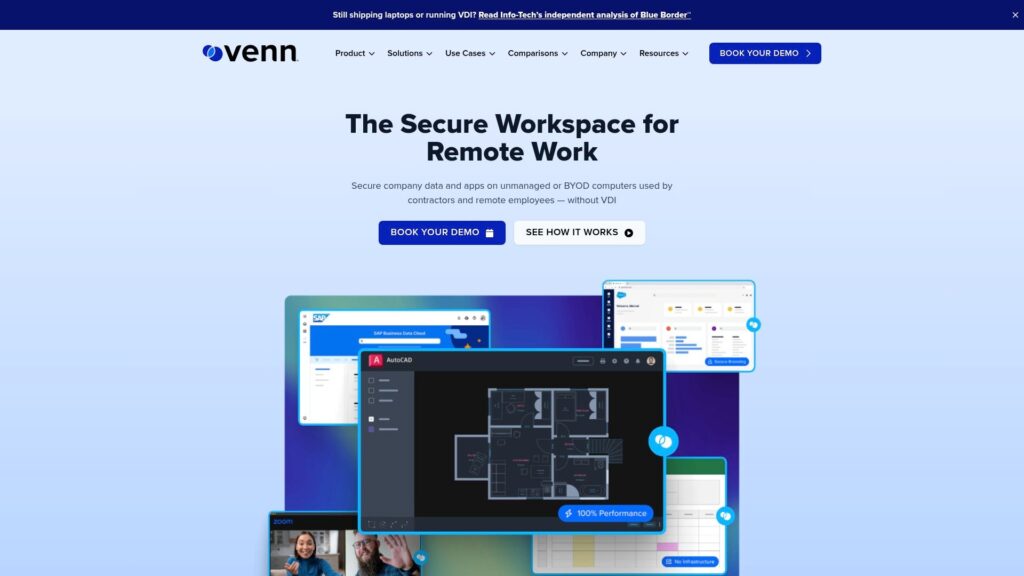
Venn offers corporate virtual cards designed to remove friction for fast-moving Canadian tech startups. The dashboard lets founders generate secure virtual cards on the fly, without the score-damaging background checks that traditional banks require. That makes it simple to delegate purchasing power to specific team members or contractor groups.
The real draw? Zero foreign exchange fees on all international purchases. If your startup relies on U.S.-based SaaS subscriptions or global ad spend, that’s significant. Routing international marketing purchases through Venn eliminates the standard 2.5 percent hidden margin fee that most legacy Canadian banks charge.
| Feature | Details |
| Primary Use Case | Virtual card generation for distributed team spending |
| Main Benefit | No bureau checks for corporate account approval |
| FX Fees | 0% on all international transactions |
| Target Audience | Startups paying for U.S. software and global ad spend |
| Starting Price | Custom pricing based on monthly volume |
Woveo

Woveo takes a community-first approach to building financial history, making it especially accessible to early-stage and immigrant entrepreneurs. By leveraging group savings dynamics and reporting alternative behavioral data, the platform enables users to build their profiles collectively. It’s a digital take on rotating savings and credit associations, a model that’s been trusted globally for generations.
Over 67 lending startups funded by Y Combinator point to a global push toward these inclusive, alternative data models. Woveo gives first-time founders or newcomers with no Canadian bureau history a real entry point. No large upfront deposits. No physical collateral. Just a collaborative, low-barrier way to prove financial reliability.
| Feature | Details |
| Primary Use Case | Building a profile through alternative behavioral data |
| Main Benefit | Collective group savings for mutual growth |
| Barrier to Entry | Very low; designed for zero-history users |
| Target Audience | Newcomer founders, immigrants, first-time entrepreneurs |
| Starting Price | Free base tier; optional premium upgrades |
Building Your Financial Foundation
Venture capital may be tightening across the country, but that doesn’t mean your startup has to stall. Proactively building your personal and business financial profiles insulates you against unpredictable economic shifts. And modern lenders increasingly rely on automated open banking data, which is set to transform Canadian lending by replacing slow manual documentation with real-time cash flow underwriting.
Whether you pick a zero-interest tradeline, an AI-powered expense dashboard, or a specialized micro-loan, the most important step is just getting started. Keep your utilization rates low, pay balances on time, and let these tools do the heavy lifting while you prioritize growing your business.