
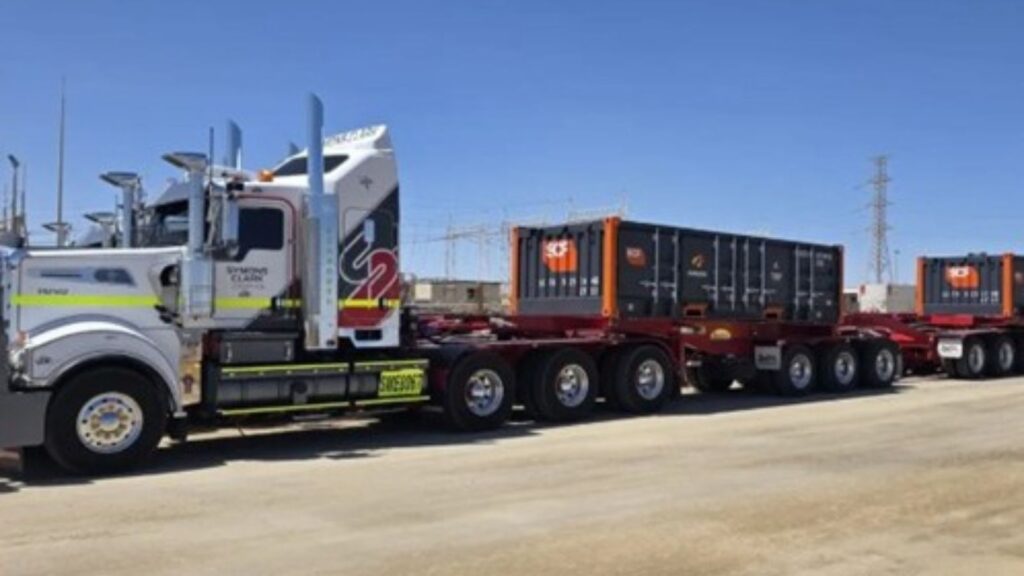
Fleet operators moving freight in and out of ports rarely have the luxury of choosing equipment on price alone; the wrong trailer for the job slows down every turnaround, and over hundreds of container movements a year that adds up fast. The two trailers most commonly compared for this work are the skeletal trailer and the flat top trailer, and while they can look similar from a distance, they’re built around fundamentally different jobs. Knowing which one actually suits your freight task is worth more than most buyers realise before they sign off on a purchase.
What a Skeletal Trailer Is Built to Do
A skeletal trailer, or “skel,” is a stripped-back frame with twist locks designed specifically to carry ISO shipping containers. There’s no deck to speak of,just a chassis engineered to lock a container securely in place and carry it between the wharf, the rail yard, and the customer’s dock.
That minimal design is the whole point. Because a skel doesn’t carry the weight of a deck structure, it maximises the payload available for the container itself, which matters when you’re running close to legal weight limits on a loaded 20 or 40-foot box. Skels are also built in specific lengths to match standard container sizes, and many are engineered as part of longer combinations, including Performance Based Standards approved configurations for operators running high-productivity routes between terminals and inland depots. Some ranges extend further into tipping skels, which allow bulk product to be discharged directly from a container-style load, giving operators intermodal flexibility that a standard flat top simply can’t offer.
What a Flat Top Trailer Offers Instead
A flat top trailer is a general-purpose deck, flat, open, and designed to carry palletised freight, machinery, timber, steel, or yes, containers, if they’re lashed down rather than twist-locked. It’s the more versatile of the two, and that versatility is exactly why so many operators keep one in the fleet even if container work is their main business.
Where a skel is purpose-built for one job, a flat top can carry almost anything within its rated capacity, provided it’s loaded and secured correctly. Drop deck and deck widener variants extend that versatility further, letting the same basic trailer type handle oversized or awkward freight that wouldn’t fit or wouldn’t be legal, on a standard flat deck.
Loading Speed and Container Security
This is where the difference between the two trailers becomes obvious on the ground. A skel’s twist locks engage directly with the container’s corner castings, so a crane or reach stacker can drop a box on and have it secured in the time it takes the driver to check the locks. There’s no chain, strapping, or lashing involved, which means faster turnaround at the terminal and less risk of a load shifting in transit.
A flat top, by contrast, requires the container or whatever freight is on board to be properly restrained with chains, straps, or dunnage, which takes longer and depends more heavily on the person doing the securing. For a business doing high-volume container runs, that extra loading time on every single movement is the main argument in favour of a dedicated skel.
There’s also a durability angle worth factoring in. Skels see repeated, heavy impact loading at the corner castings every time a container is dropped on or lifted off, so the chassis and locking mechanisms need to be engineered to handle that repeated shock loading without the frame twisting or fatiguing over time. A flat top faces a different kind of wear distributed loads shifting slightly in transit, tie-down points under constant tension which is less about impact and more about long-term structural fatigue across the whole deck.
Weight, Versatility, and Total Cost of Operation
Skels generally offer a lighter tare weight for container-specific work, since there’s no deck structure adding dead weight to the combination. That translates into more usable payload per trip, which matters directly to the bottom line on high-frequency port runs.
Flat tops carry more structural weight but earn that back in flexibility one flat top can be rotated across multiple freight types depending on what work comes in that week, whereas a skel is effectively locked into container work only. For an operator with a single, high-volume container contract, that specialisation is a strength. For an operator with mixed freight demands, a flat top spreads the cost of the asset across more use cases, which can matter more than shaving a few hundred kilograms off tare weight.
Which Trailer Suits Your Freight Task
The honest answer is that this isn’t really a competition, it’s a matching exercise. If your business runs dedicated container movements between ports, rail terminals, and depots, a purpose-built skeletal trailer will move more freight, faster, with less handling risk, and it’s the trailer most experienced container carriers default to for exactly that reason. If your freight mix changes week to week pallets one day, machinery the next, the occasional container after that a flat top or drop deck trailer earns its place through sheer adaptability.
Many established transport operations end up running both, using skels for the core container contract and flat tops to cover everything else that comes through the yard. Before committing to either, it’s worth talking through your actual route profile, container volumes, and freight variety with a trailer manufacturer who builds both types. The right combination of chassis length, configuration, and axle setup will do more for your turnaround times and cost per load than the badge on the trailer ever will.