A new investor in 2026 trying to close their first wholesale deal used to face a brutal playbook: make 200 to 300 cold calls daily, buy a $1,500 absentee owner list, pay for skip tracing on thousands of records, then wait months before seeing any revenue. That barrier kept real estate wholesaling accessible only to people with serious capital, unlimited time, or an abnormally high tolerance for rejection.
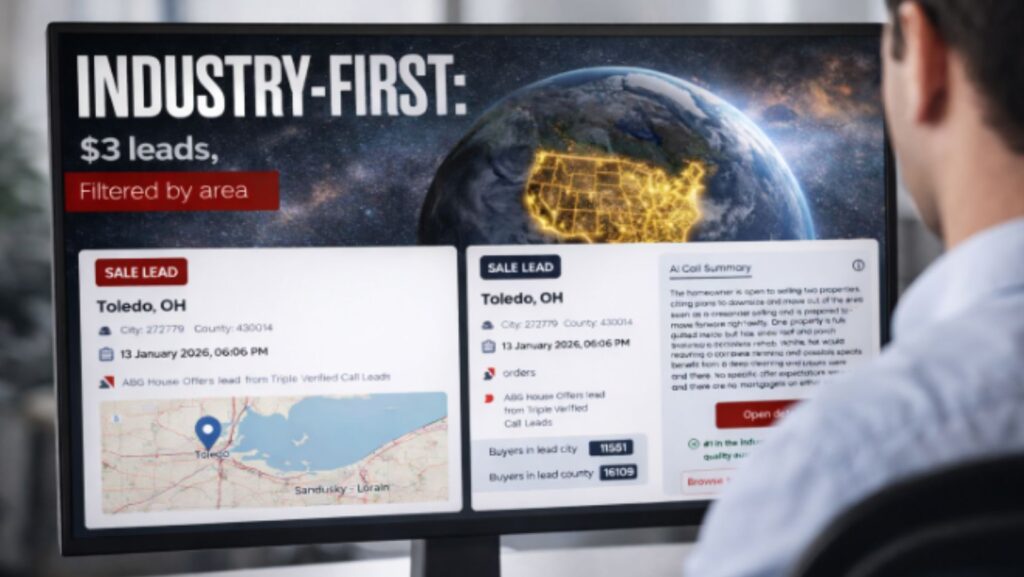
That’s changing fast. Platforms like iSpeedToLead represent a new category of investor tool: an online marketplace where wholesalers can buy individually verified motivated seller leads with AI scoring, CRM integrations, and off-market data already attached. Instead of building a call center or spending weekends driving for dollars, a new wholesaler logs in, filters by property criteria, and buys leads that algorithmic analysis has already qualified.
Wholesaling used to feel like a closed club. You either had marketing budgets large enough to run direct mail at scale, local networks deep enough to source off-market deals through word of mouth, or the stamina to dial strangers all day without burning out. Now AI-backed lead verification, real-time marketplaces, and low-cost memberships are rewriting who can realistically get their first wholesale contract under contract.
The Traditional Barriers That Kept Wholesaling Exclusive
Before marketplaces existed, most new wholesalers hit the same wall. Time, money, and skill barriers quietly filtered out everyone except the most persistent and well-funded.
The cold calling requirement was brutal. Many trainers advised 200 to 300 calls per day, several days a week, for months. Most calls went to uninterested homeowners, disconnected numbers, or voicemail. A new investor could spend 40 hours weekly on the phone and still struggle to get a single serious conversation with a property owner ready to sell at a discount.
Skip tracing costs added up fast. At $0.10 to $0.50 per record, pulling 5,000 to 10,000 records monthly could cost $500 to $2,500 before a wholesaler saw a single signed purchase agreement. List acquisition created another hurdle. Buying absentee owner, pre-foreclosure, or tax-delinquent lists from data providers often cost $1,000 or more for decent coverage of a mid-sized metro.
The time-to-first-deal problem was perhaps most discouraging. For many wholesalers between 2015 and 2020, three to six months of direct mail campaigns, cold calling, and driving for dollars was common before they locked up a viable contract. During that stretch, they earned nothing while spending significant capital.
How Lead Marketplaces Are Removing the Cold Calling Requirement
The biggest psychological barrier for beginners is calling hundreds of strangers daily. Lead marketplaces exist precisely to eliminate that step from the wholesaling workflow.
Modern platforms ingest multiple data sources, including public records, online seller inquiries, distress signals like tax delinquency and code violations, and behavioral indicators. They use AI to pre-qualify motivated seller leads before they appear in a user’s dashboard. By the time a wholesaler sees a lead, the platform has already filtered out owners unlikely to sell at a discount.
AI-powered motivation scoring weighs factors like vacancy duration, equity position, mortgage delinquency status, and inquiry behavior. The output is a probability estimate that the owner is ready to sell. A lead with an 87% motivation score represents a fundamentally different conversation than a random name pulled from county records.

Verified contact information replaces manual skip tracing. The marketplace delivers validated phone numbers and emails, so a new wholesaler can focus on 10 to 20 warm conversations instead of 1,000 blind dials. DealPredictor-style technology estimates potential spread between purchase price and sale price, likely investor interest from cash buyers, and risk level before a buyer spends money or time driving to the property.
These pre-qualified, scored leads make real estate wholesaling accessible to people with no interest in building massive outbound call centers. Someone can analyze and contact 15 to 20 pre-screened leads in a few hours rather than spending eight hours dialing for maybe two useful conversations.
Real Estate Wholesaling Accessible Through New Economics
Accessibility is ultimately a math problem. How much money and time does someone actually need in 2026 to test wholesaling with a reasonable shot at closing a deal?
A wholesale real estate lead marketplace fundamentally changes the cost structure. These platforms sell individual leads or subscriptions rather than massive, unfiltered lists. Buyers choose specific properties matching their criteria instead of paying for thousands of records they’ll never contact.
Traditional startup costs for serious wholesaling looked like this: $1,000 to $2,000 for lists, $500 to $2,500 monthly for skip tracing and dialers, several hundred more for SMS or direct mail, plus 40 to 80 hours monthly of unpaid prospecting. Total first-year investment could easily exceed $10,000 before closing a single deal.
The newer model works differently. Memberships range from roughly $50 to $300 monthly to access the platform. Users then pay per lead, selecting only properties that match their market value expectations, location, and distress level. A beginner with $200 can purchase a small batch of high-quality leads rather than committing to expensive monthly overhead.
Each lead on platforms like iSpeedToLead is verified and often backed by a money-back guarantee if contact can’t be made. The effective cost per qualified conversation drops dramatically. Time-to-first-deal compresses as well, with some new users going from account creation to locked contract within weeks.
Who’s Actually Succeeding with Technology-Driven Wholesaling
The stereotype of wholesalers as full-time hustlers with large marketing teams no longer describes the full picture. Technology has broadened the profile of who can close deals.
Side hustlers represent a growing segment. A W-2 employee working evenings can buy a small batch of motivated seller leads monthly, use AI tools for quick deal analysis, and focus on three to five quality conversations weekly. They don’t need to quit their job or master high-volume phone sales to earn a wholesale fee.
Career changers find marketplaces useful for shortening the learning curve. Stay-at-home parents and caregivers benefit from geographic flexibility, sourcing and working deals entirely online. Many of these users start part-time, using mobile-friendly platforms and simple CRM tools to keep notes and schedule follow-ups during small windows of free time.
The common thread isn’t personality type. It’s a system choice. Plugging into verified motivated seller leads and AI analysis produces better results than trying to brute-force entry with cold calls and random marketing.
Conclusion: Technology as the Equalizer in Modern Wholesaling
The core shift is from manual prospecting and guesswork to curated, AI-scored marketplaces that handle data gathering, lead verification, and initial qualification. A new investor doesn’t need to become an expert skip tracer or cold caller to find distressed property opportunities.
Technology has made real estate wholesaling accessible to people who prefer systems and analysis over cold calling marathons. The question is no longer whether someone can afford to enter the market. It’s whether they’re ready to adopt the tools that make entry realistic.
As AI gets better at predicting which properties will turn into good deals, the real differentiator will be how quickly investors adapt. The wholesalers who thrive will be those who plug into platforms like iSpeedToLead early, learn to interpret motivation scores and deal probability metrics, and treat wholesaling as a data-driven business rather than a numbers game built on sweat equity alone.